


Share This Article
Negotiating Under Fire: The New Reality of Iran’s Nuclear Question
Dr. Bahar Akın
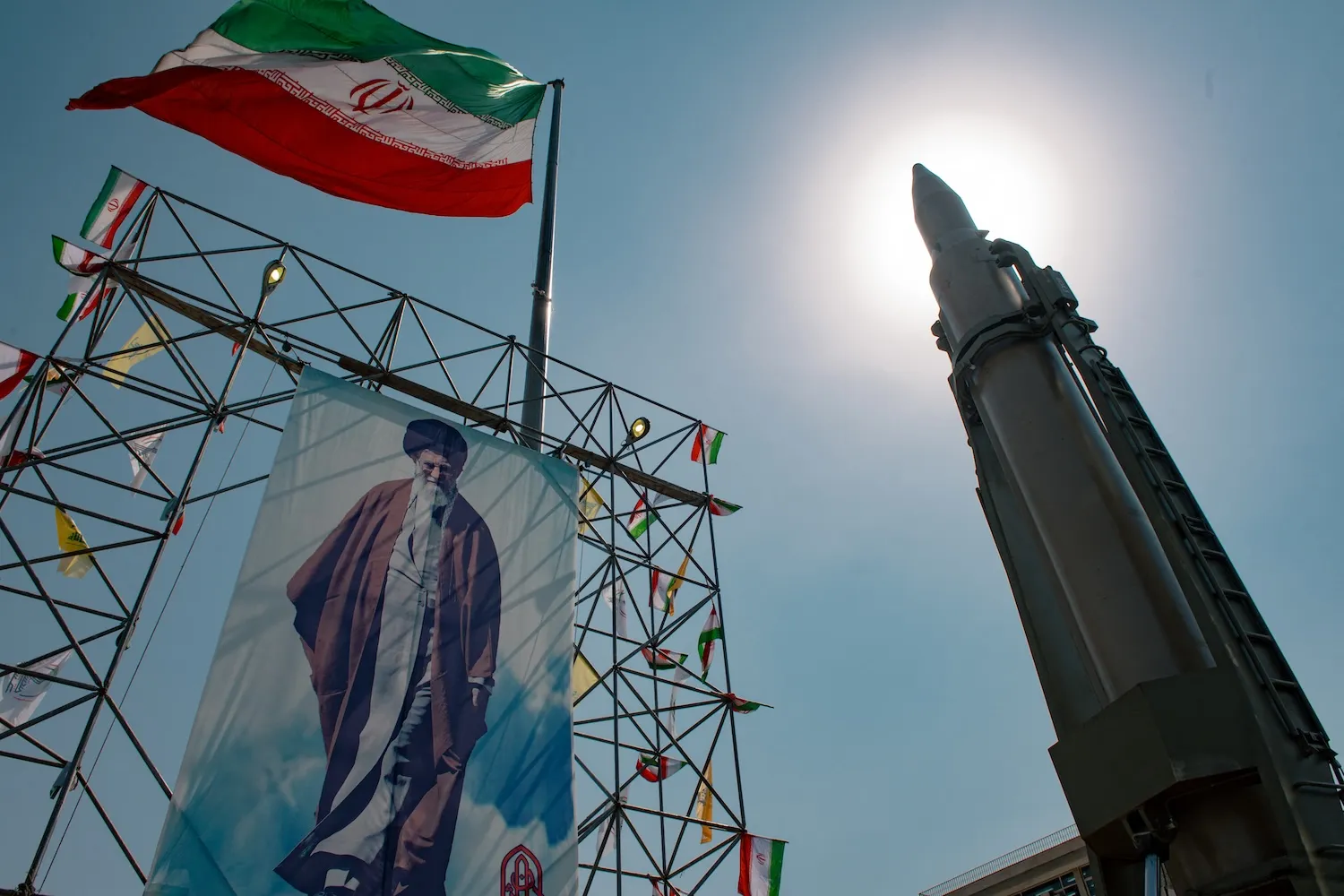
Iran’s nuclear program is no longer a technical issue of verification and compliance; it has become a geopolitical crisis shaped directly by war dynamics. The gradual unraveling and suspension of full implementation of the Joint Comprehensive Plan of Action has opened a new phase of uncertainty, now further intensified by escalating tensions involving the United States, Israel, and Iran. In this new environment, the key question is no longer whether a new agreement is possible, but rather how nuclear risk can be managed under conditions of active conflict.
Recent direct strikes by the United States and Israel on Iran’s nuclear-related and military infrastructure, combined with Iran’s asymmetric and regional responses, have fundamentally altered the strategic context of nuclear diplomacy. Nuclear capability is no longer simply a bargaining chip; for Iran, it has increasingly become a central pillar of regime security and strategic survival. This shift reflects a more profound transformation in which proximity to nuclear threshold capability is perceived not merely as a technical achievement but as an existential safeguard.
In this environment, the role of the International Atomic Energy Agency remains essential, but increasingly constrained. While verification and monitoring mechanisms continue to provide technical oversight, they are no longer sufficient to restore political trust or stabilize escalation dynamics, particularly in light of recent geopolitical tensions and the increasing complexity of international relations. Technical transparency cannot, on its own, compensate for the erosion of strategic confidence between adversarial actors.
At the same time, the conflict has expanded beyond the military domain. Rising tensions around the Strait of Hormuz have introduced a significant global energy security dimension to the crisis. Iran’s nuclear issue is therefore no longer a regional security issue; it has become a systemic risk factor for the global economy and energy markets. A further important risk is that the nature of the conflict may evolve even without the use of nuclear weapons. Strikes on nuclear-related facilities could create severe indirect consequences, including radiation leaks or environmental contamination. Even limited damage to enrichment sites or energy infrastructure could have cross-border effects. This raises the possibility that the conflict may shift into a more dangerous phase of accidental or indirect nuclear risk, rather than a deliberate nuclear escalation. In this sense, the main concern is no longer only strategic nuclear use but also the risk of escalation through miscalculation or operational damage to sensitive nuclear infrastructure.
Against this backdrop, a simple return to previous negotiating frameworks appears increasingly unrealistic. The assumptions underpinning the original JCPOA model—namely that economic incentives could reliably shape strategic behavior, that trust-based compliance could be sustained, and that nuclear constraints could be durably enforced—have all been significantly weakened by recent developments. In a context of active conflict, no state under direct military pressure is likely to voluntarily limit what it perceives as strategic deterrence capacity.
For this reason, a more pragmatic approach may be emerging: a “managed nuclear threshold” framework. This model does not seek a full rollback of Iran’s nuclear capabilities but rather aims to contain and regulate them within defined limits. It implies a partial acceptance of enrichment capacity, combined with significantly enhanced real-time monitoring and verification mechanisms. While far from an ideal solution, such an approach may represent a more realistic basis for crisis stabilization under current conditions.
However, this approach carries substantial risks. The Treaty on the Non-Proliferation of Nuclear Weapons says that making threshold capabilities normal could slowly weaken the global non-proliferation regime. If regional actors perceive such a model as acceptable, they may pursue similar strategies, potentially triggering a broader regional nuclear competition.
There are a number of policy implications that come to mind. First, regime change narratives should be deprioritized, as they tend to reinforce rather than reduce incentives for nuclear hedging behavior, which can lead to increased tensions and instability in the region. Second, the institutional and technological capacity of the International Atomic Energy Agency should be strengthened, including the integration of advanced monitoring technologies. Third, a multilateral security framework for the Strait of Hormuz should be created to address the energy security part of the crisis. Finally, rather than pursuing a single comprehensive agreement, diplomacy should shift toward incremental, phased, and adaptive arrangements that allow for flexibility in response to evolving geopolitical dynamics and technological advancements, such as establishing interim agreements that address specific issues while maintaining open channels for negotiation.
In conclusion, the Iranian nuclear file is no longer solely a proliferation issue. It has become a stress test for the adaptability of international regimes under conditions of technological acceleration and sustained geopolitical conflict. Without a reconfigured and realistic framework, the erosion of nuclear governance may extend far beyond the Middle East, affecting the integrity of the global non-proliferation architecture as a whole.