
Share This Article
Assoc. Prof. Dr. Ali Oğuz Diriöz
TOBB University of Economics and Technology
adirioz@etu.edu.tr
I. Introduction
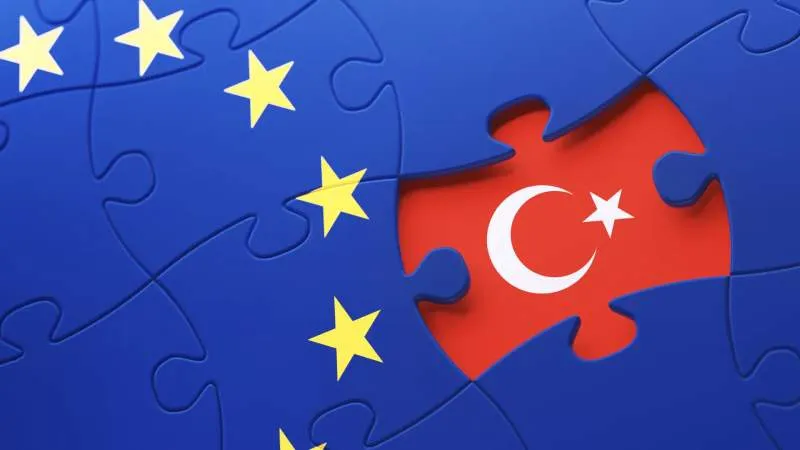
The relationship between Türkiye and Europe rests on many foundations. Geography is one of them. Trade, investment, education, NATO cooperation, the Customs Union, and Türkiye’s long EU accession process are also central parts of this relationship.
Yet the relationship is not only institutional. It is also historical and strategic. Türkiye’s modernisation, prosperity, technological transformation, and democratic resilience have long been shaped by interaction with European institutions, markets, and norms.
The reverse is also true. Türkiye matters for Europe. It matters not only as a neighbour, market, NATO ally, or migration partner. It also matters as a strategic actor. Without Türkiye, Europe’s claim to global relevance becomes harder to sustain.
This article argues that Europe and Türkiye need a renewed partnership. This partnership should be realistic. It should be based on mutual respect. It should also recognise the full scope of interdependence between the two sides.
II. Europe’s Normative Deficit in a Competitive World
The European Union is trying to adapt to a more fragmented world. The Russia–Ukraine conflict continues to affect the wider Black Sea region. Arms control is weakening. Great power rivalry is returning. Crises in the Middle East and the Gulf continue to affect energy, migration, and security. Non-Western actors are also becoming more influential in Africa, Central Asia, and the wider Global South.
These changes push the EU beyond its traditional comfort zone.
For decades, the EU’s main source of global influence was normative power. Europe attracted others through enlargement, regulations, trade, development policy, and institutional models. This approach gave Europe considerable influence. It often allowed the EU to shape outcomes without relying on hard power.
But today’s international environment is different. Normative language alone is no longer enough. It must be supported by strategic agility, security capacity, and credible diplomacy.
The EU still has major economic and regulatory power. It remains institutionally sophisticated. But weight is not the same as influence.
Germany’s failure to secure a non-permanent seat on the United Nations Security Council is an important warning. Germany remains one of the world’s strongest economies. It is also a central pillar of the European project. Yet this result showed that economic size and financial contribution do not automatically produce diplomatic support.
In today’s world, votes from Africa, Asia, Latin America, and the Middle East matter. Europe can no longer assume that its preferred candidates, narratives, or policies will be automatically accepted. Diplomatic support must be earned. This requires listening. It also requires coalition-building. Above all, it requires partners with credibility beyond the Atlantic world.
III. Türkiye’s Multidimensional Relevance
Türkiye’s strategic relevance becomes clearer in this context.
This does not mean that Türkiye should be idealised. Ankara and Brussels have serious disagreements. These include the rule of law, visa liberalisation, Cyprus, the Eastern Mediterranean, Customs Union modernisation, and foreign policy coordination. These issues are real. They should not be ignored.
However, strategic maturity requires a basic recognition. Persistent disagreement does not erase structural interdependence.
Türkiye’s value for Europe is partly linked to defence. Turkish drones, naval platforms, armoured vehicles, electronic warfare systems, and a growing defence industry have attracted attention. This is especially true after the outbreak and continuation of the Russia–Ukraine conflict.
The conflict has shown that drone warfare, air defence, maritime security, logistics, and production capacity are central to modern security. They are not secondary issues. Türkiye has gained practical experience in many of these areas. Structured cooperation with Türkiye could therefore serve European security interests.
Yet Türkiye’s importance should not be reduced to drones or defence industry.
Türkiye’s deeper relevance is diplomatic and geopolitical. It is a NATO ally that has kept channels open with Russia. It is a Black Sea littoral power. It understands the Montreux Convention not only as a legal text, but also as a regional security architecture.
Türkiye also helped facilitate the Black Sea Grain Initiative. This showed that limited diplomatic arrangements can still serve humanitarian and global food security goals during conflict.
Türkiye is also connected to several strategic regions. These include the Balkans, the Caucasus, Central Asia, the Middle East, and North Africa. These connections are based on geography, history, business networks, cultural ties, religious affinities, infrastructure, and diplomacy.
This does not mean that Türkiye can solve every crisis. It cannot. But Türkiye often has access, language, and political instincts that many European capitals lack.
IV. The Black Sea Dimension
Recent incidents in Romania make this argument more urgent.
Drone strikes and maritime drone explosions near NATO and EU territory are not abstract risks. They are warnings. Escalation in the Black Sea can quickly affect civilians, ports, energy infrastructure, grain routes, and alliance credibility.
The incident in Galați showed that the conflict can directly affect populated areas in a NATO member state. The maritime drone explosion in Constanța also showed how fragile the Black Sea security environment has become.
Deterrence is necessary. NATO and the EU cannot appear indifferent to violations of allied territory. But deterrence also needs escalation management. If every incident leads only to harder rhetoric and more military signalling, the risk of miscalculation rises.
Türkiye’s position in the Black Sea is therefore not a narrow national matter. It is also a European strategic asset.
Ankara has tried to combine support for Ukraine’s sovereignty with caution about uncontrolled escalation in the Black Sea. This position is not always easy to understand. It is sometimes criticised from different sides. Yet Europe may need exactly this kind of balancing capacity.
Europe must defend sovereignty and territorial integrity. But it must also prevent the conflict from spreading. Türkiye’s Black Sea experience is relevant to both objectives.
V. Türkiye and the Global South
The same logic applies beyond the Black Sea.
In Central Asia, the EU has legitimate interests. These include connectivity, critical minerals, energy diversification, transport corridors, digital infrastructure, and political engagement.
However, Europe should not treat Türkiye as an actor to be bypassed in the region. That would be a missed opportunity.
Türkiye has strong linguistic, cultural, and institutional ties with Turkic states. It also has growing business, educational, and diplomatic engagement in Central Asia. Rather than seeing Türkiye’s presence as competition, Brussels and Berlin should explore cooperation with Ankara.
A triangular approach could be useful. European capital and regulatory standards could be combined with Turkish connectivity and Central Asian ownership. This would likely produce better results than fragmented and parallel initiatives.
Africa offers another example.
Over the past two decades, Türkiye has built a broad presence across the continent. Turkish Airlines, development agencies, construction firms, embassies, educational institutions, and business networks have expanded Türkiye’s visibility.
Europe has deep ties with Africa as well. But it also faces the burden of colonial memory. In some contexts, European policies are viewed as hierarchical or conditional. Türkiye is not free from criticism. Still, its presence is often perceived differently.
This creates space for cooperation. In areas such as infrastructure, food security, renewable energy, vocational education, water management, and small enterprise development, EU–Türkiye cooperation could generate positive-sum outcomes.
The Middle East provides a third example.
Europe is affected by every major crisis in the region. Migration, energy disruptions, terrorism, humanitarian emergencies, and trade instability all have direct consequences for Europe.
Yet European diplomacy is often divided. It can also be slow. In some crises, it is perceived as too one-sided.
Türkiye’s diplomacy is also contested. But Ankara can speak with a wide range of regional actors. This gives Türkiye a degree of versatility that European institutions often lack.
Europe does not need to agree with every Turkish position. But it should recognise the value of Türkiye’s diplomatic channels.
VI. Toward a Renewed Strategic Partnership
The future of EU–Türkiye relations should not be trapped in a narrow binary. The choice should not be only accession or estrangement.
Türkiye’s EU membership remains important as a normative and institutional horizon. Preserving that horizon serves the long-term interests of both sides. But the relationship also needs a practical agenda for the present; especially in the form of a clear agenda for Türkiye becoming full member of the EU as soon as possible. Such a perspective would also help strengthen rules based systems in Türkiye, which would in turn inspire further confidence to Türkiye’s economy.
This agenda, in addition to a clear membership road-map, should include Customs Union modernisation. It should also include visa facilitation, green transition cooperation, digital regulatory alignment, energy infrastructure, defence industrial cooperation, Black Sea security, migration management, and joint work in third regions.
Such a framework must be based on mutual respect.
Türkiye should not see Europe only as a market, source of investment, or political benchmark. Europe is an institutional mirror for many major institutions in Türkiye. Europe should not see Türkiye only as a border manager, security contractor, or difficult neighbour. Yes, Türkiye has room for improvement on many issues, but EU should not only put the blame on Türkiye.
Both sides need a better language. This language should recognise differences. But it should also build on real complementarities.
VII. Conclusion
For Türkiye, Europe remains indispensable. It matters for economic modernisation, regulatory credibility, technological upgrading, educational exchange, and democratic institutional anchoring. A strategic turn away from Europe would be costly and shortsighted.
For Europe, marginalising Türkiye would also be costly. It would weaken Europe’s reach into the Black Sea, Central Asia, the Middle East, Africa, and the wider Global South. It would also reinforce a damaging perception. Europe often speaks about global partnership, but it does not always cooperate meaningfully with important neighbouring powers.
The lesson of Germany’s UN Security Council result is not that Europe is irrelevant. Europe remains powerful, wealthy, and institutionally advanced. The lesson is different. Europe can no longer assume that others will automatically support its preferences.
Influence must be earned. It requires listening. It requires patient coalition-building. It also requires credible partnerships across different regions.
Türkiye has the geography, diplomatic networks, and experience to support this objective. A Europe that works more strategically with Türkiye would be stronger in defence. It would be more credible in diplomacy. It would be better connected to the Global South. It would also be more consequential across Eurasia.
A Türkiye that remains constructively anchored in Europe would also gain. It would be more prosperous, more institutionally resilient, and more influential globally.
The choice is not between Europe and Türkiye. The real choice is between fragmentation and partnership.
At a time when the Black Sea is becoming more dangerous, the Global South more assertive, and the international order more contested, neither Europe nor Türkiye can afford strategic self-indulgence. Geopolitical necessity, not nostalgia, should be the basis for a renewed partnership.
References
Associated Press. “A Ukrainian Maritime Drone Explodes at a Romanian Black Sea Port. No Injuries Reported.” 5 June 2026.
Acer, Yücel. “Russian Attack on Ukraine and Turkey’s Approach in Implementing the Montreux Convention.” SETA, March 2022.
European Commission. “EU Trade Relations with Türkiye.” Directorate-General for Trade, 2026.
European Commission. “Türkiye.” Directorate-General for Enlargement and Eastern Neighbourhood, 2026.
European External Action Service. “Joint Statement by Turkish Foreign Minister H.E. Hakan Fidan and EU Commissioner for Enlargement H.E. Marta Kos.” 6 February 2026.
Euronews. “Germany Fails to Gain Seat on UN Security Council.” 3 June 2026.
Ministry of Foreign Affairs of the Republic of Türkiye. “Türkiye–Africa Relations.”
Reuters. “Romania Says Russian Drone Hit Apartment Block, NATO Vows to Defend Alliance Territory.” 29 May 2026.
Reuters. “Drone Explodes in Romanian Port as Ukraine Blames Russia for Jamming It.” 5 June 2026.
Reuters. “Europe, Turkey Agree to Work Toward Updating Customs Union.” 6 February 2026.
Republic of Türkiye, Ministry of Foreign Affairs. “Implementation of the Montreux Convention.” Relevant official statements, 2022.
United Nations. “Black Sea Grain Initiative: Updates.” United Nations, 2022–2023.
United Nations. “What Is the Black Sea Initiative?” United Nations video explainer, 2022.
World Bank. “Middle Corridor: Policies and Investments to Triple Freight Volumes and Halve Travel Time by 2030.” 2023.
Organization of Turkic States. “Turkic World Vision 2040.” Istanbul, 2021.
Turkish Cooperation and Coordination Agency. “Türkiye’s Development Cooperation and Humanitarian Assistance Activities.” Relevant annual reports.
European Council. “EU–Türkiye Relations.” Council of the European Union, updated policy documents.
NATO. “Türkiye and NATO.” North Atlantic Treaty Organization, official country and alliance materials.
UN Security Council. “Elections of Non-Permanent Members of the Security Council.” United Nations documentation, 2026.